


Your Dog Isn't "Bad." Your Toys Just Die in 20 Minutes.
Kong empties. Puzzle solved. Chew gone. Then your dog has 7 hours of nothing — and your couch becomes the most interesting thing in the room. KeepChasing™ is the first enrichment ball that doesn't run out.

Noudon saatavuutta ei voitu ladata
🚚 Free shipping
🛡️ 30-day guarantee
🔋 4h battery
KeepChasing™ Smart Ball Keeps your dog busy when you can't



THE REAL PROBLEM
Every Enrichment Product You Own Has the Same Fatal Flaw
Kong. Snuffle mat. Lick mat. Frozen peanut butter. They all share one thing: they start full and end empty.
Time your Kong tomorrow morning. Seriously — set a stopwatch. Most dogs finish it in 15 to 30 minutes. Now count the hours until you get home.
That's not enrichment. That's a 20-minute distraction followed by 7+ hours of absolutely nothing. The guilt you feel leaving isn't irrational. Your instinct is right — 20 minutes genuinely isn't enough. But the problem isn't that you leave. The problem is that every solution you've tried dies within the first half hour.

WHAT HAPPENS NEXT
The 7-Hour Gap Where Everything Goes Wrong
If you have a pet camera, go check the timestamp on when the damage starts. For most dogs, it's 20 to 40 minutes after you leave — right when the last treat is gone, the Kong is licked clean, and the frozen stuffing has melted.
Before that timestamp: calm dog with something to do. After that timestamp: a dog with nothing to engage with and a couch that can be disassembled.
That gap between "enrichment exhausted" and "you come home" is where the chewing starts. The pacing starts. The barking starts. Your dog isn't being spiteful. Your dog's brain is wired to seek stimulation, and your furniture is the most interactive thing left in an otherwise dead environment.
Dog trainers and behaviorists consistently report the same pattern: most boredom-driven destruction begins 20 to 40 minutes after the owner leaves — exactly when the last enrichment item runs out.The gap is the problem.

THE OTHER TRAP
More Exercise Doesn't Tire Your Dog. It Trains Your Dog.
If your daily walk keeps getting longer but your dog doesn't get calmer, you're not failing. You're accidentally building an endurance athlete.
Physical exercise builds the body. But it's the brain that controls whether your dog settles or bounces off the walls. A dog that ran three miles and recovered in five minutes isn't defective — it's fit. And you made it that way. Trainers who work with high-energy breeds see this every day: owners doubling walk time while the dog just gets fitter, not calmer.
KeepChasing™ breaks this cycle because unpredictable movement forces the brain to work. Your dog can't anticipate where the ball goes next, so she has to actually think. That mental effort is what produces the calm you've been chasing with longer walks.

THE SHIFT
KeepChasing™ Doesn't Deplete. Because It Doesn't Run on Treats.
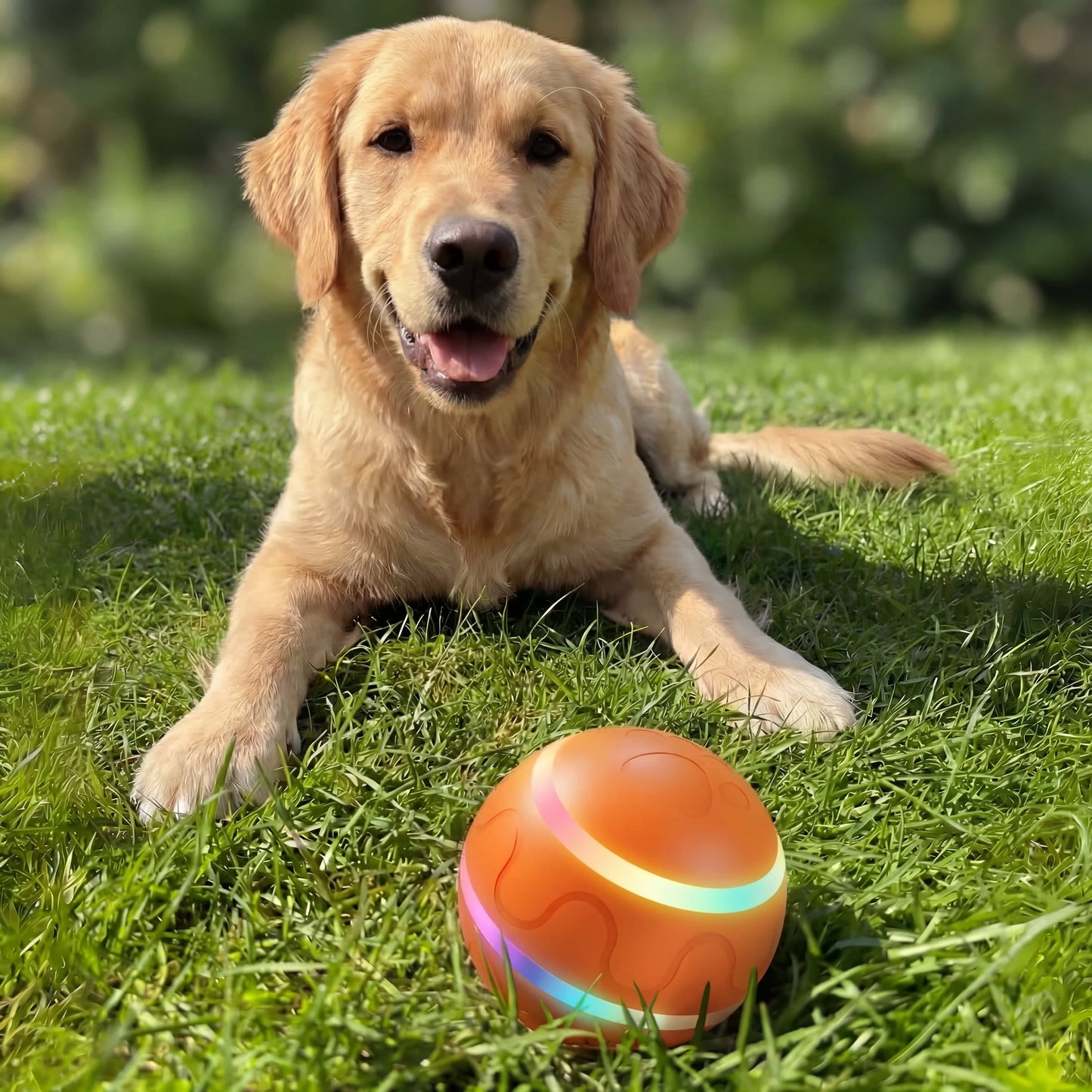
KeepChasing™ is a self-moving smart ball that engages your dog through movement, not food. There's no treat to finish. No puzzle to solve. No empty state.
The ball activates, rolls unpredictably, pauses, then reactivates — creating cycling enrichment that distributes engagement across hours, not minutes. When your dog nudges it, it responds. When it's been still, it spontaneously starts again.
This is the difference between depleting enrichment and cycling enrichment. Your Kong gives your dog one burst, then dies. KeepChasing™ gives your dog an engagement cycle that self-renews throughout the day.
$49. One button. Enrichment that doesn't run out. 30 days to decide.
It Triggers the Same Instinct as a Squirrel in the Yard
KeepChasing isn't random. Its movement pattern triggers your dog's natural prey drive sequence: orient, stalk, chase, grab. The ball rolls erratically, changes direction, pauses, and escapes when touched, activating the whole cycle. Each part of this sequence triggers dopamine release, making engagement self-sustaining.
It Moves. Dog Notices.
The ball rolls on its own, erratic, unpredictable movement that catches your dog's attention the way a critter darting across the floor would. Impossible to ignore.
Dog Chases. Ball Escapes.
When your dog approaches, the ball changes direction. It doesn't just sit there waiting to be chewed, it reacts. This chase-and-escape loop is what your dog was built for.
It Rests. Then Starts Again.
After a play cycle, the ball goes quiet. Then it reactivates on its own, starting a new engagement loop your dog didn't see coming. No owner, no treats, no resetting needed.
COMMON QUESTIONS
Before You Decide
My dog destroys every toy. Won't they just chew this apart?
My dog destroys every toy. Won't they just chew this apart?
KeepChasing™ is designed to be chased, not chewed. The hard polycarbonate shell resists casual mouthing and excited nudging. That said — this is not a chew toy. If your dog's primary behavior is heavy-jaw chewing (think: destroys Kongs, cracks Nylabones), supervised introduction is recommended. For the vast majority of dogs, the ball's movement makes chasing it far more interesting than trying to destroy it.
Will my dog actually play with it, or just ignore it?
Will my dog actually play with it, or just ignore it?
Most dogs engage immediately — the erratic rolling movement triggers the same prey-drive instinct that makes squirrels irresistible. Some dogs need 2–3 sessions to warm up, especially if they've never seen a self-moving object. Start on Normal mode and let them investigate on their own terms. If your dog genuinely doesn't engage after a few tries, our 30-day guarantee means you can return it for a full refund.
Is it safe for small dogs or puppies?
Is it safe for small dogs or puppies?
Yes. The ball is designed with two speed modes — Normal mode is gentle enough for small breeds and puppies over 12 weeks. The obstacle avoidance prevents it from cornering or overwhelming cautious dogs. Many owners of chihuahuas, dachshunds, and toy breeds report their dogs love it on Normal mode.
Can I use it outside?
Can I use it outside?
We recommend indoor use only. The ball's sensors are calibrated for indoor surfaces, and outdoor terrain (grass, gravel, uneven ground) will impair movement and potentially damage the shell. Think of it as your dog's indoor companion for the hours you can't be there.